That Rattle at 2 a.m. Might Not Be Nothing
It’s the first cold night of the season. You flip the thermostat to “heat,” and your furnace groans to life. There’s a dusty smell. Maybe a click or a rumble you don’t remember from last year.
Your furnace is 12, maybe 15 years old. And somewhere in the back of your mind, a worry shows up. What if the heat exchanger is cracked?
Sound familiar? You’re not alone. Many Wichita homeowners with aging furnaces carry that same quiet fear every fall. It’s frustrating not knowing whether your family is safe or whether you’re about to get hit with a big bill.
Here’s the good news. Regular furnace maintenance is the best way to catch heat exchanger problems early. Better yet, it often stops them from starting. In this guide, you’ll learn what a heat exchanger does, why older furnaces crack, what a real checkup should include, and how to tell an honest diagnosis from a sales pitch.
What a Heat Exchanger Actually Does (and Why It Matters)
Think of the heat exchanger as a metal wall. On one side, gas burns and makes hot exhaust. On the other side, air from your house moves past and picks up the heat. That warm air goes to your rooms. The exhaust goes out the flue.
That metal wall keeps those two air streams apart. When it works, you get clean, warm air. When it cracks, exhaust gases can leak toward the air your family breathes. One of those gases is carbon monoxide (CO). You can’t see it or smell it.
That’s why a cracked heat exchanger is such a big deal. It’s not just a repair issue. It’s a safety issue.
Why Older Furnaces Are More at Risk
Metal grows when it heats up and shrinks when it cools down. Every time your furnace turns on and off, the heat exchanger flexes a tiny bit. Do that thousands of times a year for 10 or 15 years, and the metal gets tired. Tiny weak spots can form, often near bends and welds.
Wichita weather makes this worse. Fall and spring here bring warm afternoons and chilly nights. Your furnace may cycle on and off many times in one day. More cycles mean more stress on the metal.
The Hidden Cause Most Homeowners Miss: Overheating
Here’s the thing. Age alone doesn’t usually crack a heat exchanger. Overheating speeds it up.
When not enough air moves across the heat exchanger, it runs hotter than it was built to run. Heat builds up. The metal stretches more than normal. Over time, that extra stress can lead to cracks.
What causes poor airflow? A clogged filter is the most common cause. Closed or blocked vents, a dirty blower wheel, and undersized ductwork also play a part. Kansas wind and dust don’t help. Filters can clog faster here than you’d expect, especially in a busy winter. (Our guide on how often to replace your furnace filter in a Wichita winter breaks this down.)
A furnace that’s too big for the house can also cause trouble. It heats the home fast, shuts off, and starts again soon after. That “short cycling” adds stress with every start.
The Test That Tells the Real Story
Want to know the secret many homeowners never hear about? It’s called a temperature rise test.
Every furnace has a sticker inside the cabinet. It lists a safe range for how much the air should warm up as it passes through. A good technician measures the air going in and the air coming out. Then they compare the difference to that range.
If the rise is too high, your heat exchanger is running hot. That’s an early warning sign. It’s often fixable with a filter change, a blower cleaning, or a fan speed adjustment, long before any crack forms. This one check is a big reason a proper furnace tune-up can add years to an older unit.
What Real Furnace Maintenance Should Include
Not all tune-ups are the same. Some are a quick look and a filter swap. For a furnace over 10 years old, you need more than that.
The table below shows what a thorough checkup covers and why each step matters for an aging furnace.
| Maintenance Step | What It Checks | Why It Matters for a 10+ Year Old Furnace |
|---|---|---|
| Heat exchanger inspection | Cracks, rust, soot, and wear on the metal walls | Catches the most serious safety problem early |
| Temperature rise test | Air temperature going in vs. coming out | Shows if the heat exchanger is overheating |
| Combustion and CO check | How cleanly the gas burns; CO levels in exhaust and around the unit | Spots unsafe burning or leaks |
| Burner and flame check | Flame color, shape, and steadiness | A flame that wavers when the blower starts can point to a crack |
| Blower cleaning and airflow check | Dirt on the blower wheel; filter and vent condition | Good airflow keeps the heat exchanger cooler |
| Flue and venting check | Blockages, rust, and loose joints in the exhaust pipe | Makes sure exhaust leaves the house safely |
| Safety controls test | High-limit switch, flame sensor, rollout switches | These shut the furnace down if something goes wrong |
| Electrical and gas connections | Loose wires, worn parts, gas pressure | Prevents breakdowns on the coldest nights |
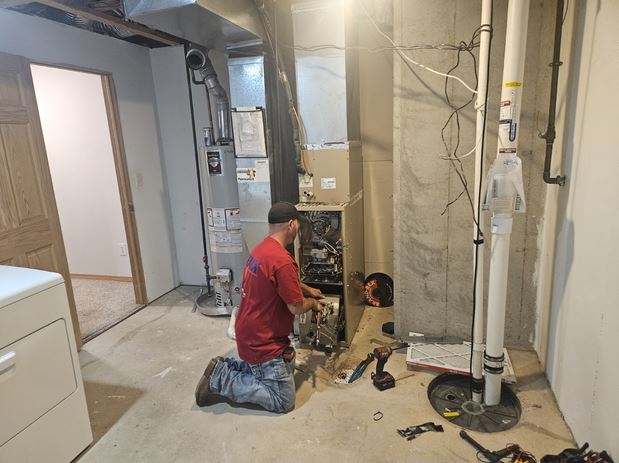
Some of these steps you can help with at home. Changing your filter is the big one. Our do-it-yourself tips and air filter guide walk you through it. But heat exchanger and combustion checks need trained eyes and the right tools. This isn’t a weekend project.
Warning Signs You Shouldn’t Ignore
Look, most furnace noises are normal. A soft click and a whoosh when the burners light? That’s fine. But some signs mean you should call a pro soon.
Watch for black soot around the burners or on the furnace door. Look for rust or white flakes on parts inside the cabinet. Notice if the burner flame looks yellow, lazy, or jumps around when the blower kicks on. A healthy flame is mostly steady and blue.
Pay attention to your body, too. Headaches, dizziness, or nausea that ease when you leave the house can be signs of CO exposure.
And here’s what matters most. If your carbon monoxide alarm goes off, don’t wait. Get everyone out of the house. Then call 911 or your gas company from outside. Don’t go back in until they say it’s safe.
Don’t have CO alarms? Put one on every level of your home, near bedrooms. They’re cheap, and they’re your backup if something goes wrong between checkups.
“Your Heat Exchanger Is Cracked” — How to Know It’s True
This is the part that keeps a lot of people up at night. You’ve heard the stories. A tech shows up for a $79 tune-up and leaves you with a $9,000 replacement quote.
It’s frustrating. And honestly, it’s a fair worry. A cracked heat exchanger is one of the most common reasons given for a full furnace replacement. That makes it easy to misuse.
So how do you protect yourself? Ask to see the proof. A real crack can usually be shown with a photo or an inspection camera. Ask what tests were done, like a combustion or CO reading. Ask the tech to point out exactly where the problem is.
Also ask one simple question: “Are you paid on commission?” It’s not rude. It’s smart. Someone who earns more when you buy more has a reason to push.
The exception is a true emergency. If CO is present or the tech sees a clear, visible crack, they may need to shut the furnace off right away. That’s a safety call, not a sales tactic. Even then, you should get a clear explanation and photos.
Repair, Replace, or Wait?
If a crack is confirmed, the heat exchanger usually has to be replaced, or the whole furnace does. On a newer unit, a warranty may cover the part. On a 15-year-old furnace, replacement often makes more sense. Labor costs are high, and other parts are aging too.
But if your heat exchanger looks healthy? An older furnace can keep running safely for years with good care. Don’t let anyone rush you.
Why Wichita Homeowners Trust Fenix for Older Furnaces
At Fenix Heating & Cooling, we’ve been working on Wichita furnaces since 1988. Our advisors are not paid on commission. That means the advice you get is about your furnace, not about a sales target.
We also start with the phone. Furnace acting up? Call our in-office experts at 316-945-4842 before you book a visit. We’ll help you troubleshoot for free. Sometimes it’s a tripped switch or a clogged filter, and you won’t need a visit at all.
When a visit is needed, our comfort specialists run the full checklist above. Many of our technicians have been with us for 10 years or more, so they’ve seen a lot of aging furnaces. If we find a problem, we’ll show you what we found and explain your options in plain words. You can learn more about our heating repair services or meet our team.
When Replacement Is the Right Call
Sometimes an old furnace has given all it can. If that’s where you land, you shouldn’t have to pick a new system from a brochure.
At our Wichita showroom, you can see real Lennox furnaces running. You can even hear the difference in how loud they are. Fenix Heating & Cooling has earned the Lennox Centurion Award for 15 years in a row. You’ll know exactly what you’re getting before we ever touch your home. See our heating installation options to get started.
Make Maintenance Automatic
The easiest way to stay on top of an older furnace? Don’t rely on memory. Our Protection Plan covers yearly checkups and gives members 20% off parts and labor. It’s a simple way to make sure your heat exchanger gets a close look every single year.
Frequently Asked Questions
How often does a 10+ year old furnace need maintenance?
Once a year, every year, ideally in early fall before heavy use starts. Older furnaces have more wear, so skipping a year is riskier. Between visits, check your filter every month during winter.
Can furnace maintenance prevent a cracked heat exchanger?
It can’t stop metal from aging, but it can slow the damage a lot. Most early cracking comes from overheating caused by poor airflow. A tune-up that includes a temperature rise test and airflow check can fix those problems before they cause cracks.
Will a CO detector tell me if my heat exchanger is cracked?
Not always. A small crack may not leak enough CO to set off an alarm at first. A CO detector is an important safety backup, but it doesn’t replace a hands-on inspection by a trained technician.
What should I do if a company says my heat exchanger is cracked?
Ask for photos or camera footage of the crack and the test results that back it up. Ask if the tech is paid on commission. If you’re unsure, get a second opinion from a company like Fenix Heating & Cooling that doesn’t pay advisors on commission.
Peace of Mind Starts With One Visit
An older furnace doesn’t have to mean constant worry. Most heat exchanger trouble starts with things you can catch early: poor airflow, overheating, and skipped checkups. A thorough yearly tune-up, a clean filter, and working CO alarms go a long way.
And if someone ever tells you your furnace is unsafe, you now know what to ask. Proof, not pressure.
Ready to feel relieved instead of anxious this winter? Call Fenix Heating & Cooling at 316-945-4842 or schedule your furnace checkup online. We’ll take a close look, explain what we find, and help you stay warm and safe all season long.
Trust the Fenix Comfort Heroes to rescue you from your HVAC problems. Don’t wait until the first day of winter to discover your furnace is not working! Turn it on today. If it’s not running properly, contact us and we’ll work to get your system fixed before the first frost.
Join the Fenix Protection Plan Service Program today! You’ll receive some nice benefits, like 20% off all parts and labor and having the peace of mind to know that your HVAC unit is being serviced by the best comfort specialists in Wichita!
Visit our showroom to see all our trusted products on display at 802 West 2nd St., just across from Wichita’s new library, or give us a call at 316-945-4842.
Be sure to check out our current promotions to get the best deal on meeting your comfort needs!
 Trust the Fenix Comfort Heroes to rescue you from your heating and cooling problems. Don’t wait until the first day of winter to discover your furnace is not working! Turn it on today. If it’s not running properly,