

The Click-Click-Silence Nobody Wants to Hear
It’s the coldest night of January. The wind is howling across Sedgwick County, and you wake up to a quiet house. Too quiet.
The furnace clicks. It tries to start. Then nothing.
If your furnace is 10 years old or older, that scene probably isn’t just a bad dream. It’s the thing you quietly worry about every fall. And honestly? That worry makes sense.
Here’s the good news. Most mid-winter breakdowns don’t come out of nowhere. They send warning signs weeks or even months ahead, and good furnace maintenance is how you catch them. In this guide, you’ll learn what actually wears out on an older furnace, what a real tune-up should check, what you can safely do yourself, and how to tell when a repair stops making sense.
Why Year 10 Changes Everything
A furnace in its first few years is pretty forgiving. Skip a tune-up, and it usually keeps chugging along. After about a decade, though, the math flips.
Most gas furnaces are built to last somewhere around 15 to 20 years with good care. That puts a 10-year-old unit firmly in its second half. Parts that were brand new are now worn, and worn parts love to fail at the worst possible time: the first hard freeze.
Wichita Winters Play Rough
Kansas weather doesn’t do your furnace any favors. We can swing from 60 degrees to single digits in a couple of days. Every one of those swings means more starts and stops, and every start puts a little more wear on the igniter, the motors, and the heat exchanger.
Then there’s the dust. Between the wind, nearby fields, and spring cottonwood fluff, Wichita air carries a lot of stuff. It ends up in your filter, on your blower wheel, and coating your flame sensor.
The First Cold Week Rush
Look, here’s something most homeowners don’t think about. The busiest days for any Wichita heating company are usually the first truly cold days of the season. Thousands of people flip on furnaces that sat all summer, and a lot of them discover a problem on the same night.
Waiting until then means waiting in line with everybody else. A fall tune-up gets you looked at while the schedule is still calm.
What Actually Wears Out on an Older Furnace
So what breaks? Since 1988, the comfort specialists at Fenix Heating & Cooling have seen the same handful of parts fail on older furnaces again and again. Here’s a quick look at the usual suspects.
| Part | What It Does | Warning Sign | What a Tune-Up Does |
|---|---|---|---|
| Igniter | Lights the gas | Furnace tries to start but never lights | Checks for cracks and tests it |
| Flame sensor | Proves the flame is on so gas keeps flowing | Burners light, then shut off after a few seconds | Cleans buildup off the sensor rod |
| Blower motor and capacitor | Pushes warm air through your ducts | Humming, weak airflow, or a blower that won’t start | Tests the capacitor and motor, cleans the blower wheel |
| Inducer motor | Pulls exhaust gases out of the furnace | Loud whine, rattle, or grinding at startup | Listens for worn bearings, checks the pressure switch |
| Limit switch | Shuts the furnace off if it overheats | Runs a few minutes, stops, then starts again | Tests the switch and finds the airflow problem behind it |
| Heat exchanger | Keeps burner gases out of your air | Soot, strange smells, or a CO alarm | Inspects for cracks, rust, and leaks |
Notice something? Almost every warning sign on that list shows up before a total breakdown. The trick is having someone trained to spot them.
The One Part That Really Matters
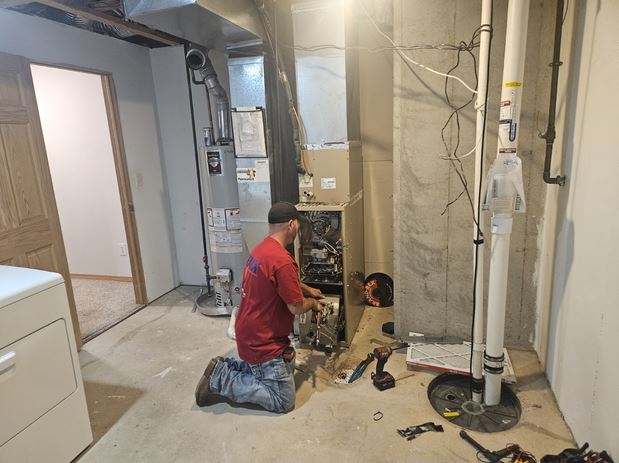
Most of those parts are about comfort. The heat exchanger is about safety.
Years of heating up and cooling down can stress the metal until it cracks. When that happens, combustion gases can leak into the air you breathe, including carbon monoxide. You can’t see it, and you can’t smell it. That’s the biggest reason to keep up with furnace maintenance on an older unit. It’s also why every home with a gas furnace needs working CO detectors, tune-up or not.
What a Real Furnace Maintenance Visit Should Include
Not every tune-up is created equal. Some are a quick filter swap followed by a sales pitch. A real visit takes time and covers the whole system.
A good tech will test the igniter and clean the flame sensor. They’ll check gas pressure and watch for a steady blue flame. They’ll measure how hard the blower motor is working and test the capacitor against its rating. And they’ll check every safety switch, look over the heat exchanger and venting, and test for carbon monoxide.
Questions Worth Asking Your Tech
Here’s the thing. You’re allowed to ask questions, and a good tech will be glad you did.
Ask how the capacitor tested compared to its rating. Ask how the heat exchanger looked. Then ask the best question of all: “If this were your furnace, what would you keep an eye on this winter?”
If the answers are vague, or every answer ends with “you need a new system,” that’s a red flag. At Fenix Heating & Cooling, our advisors aren’t paid on commission. So when one of our long-tenured comfort specialists says a part is getting weak, it’s because it is. There’s no bonus riding on the answer.
What You Can Do Yourself (and Where to Stop)
Some furnace maintenance is easy and safe for homeowners. The biggest one is the filter.
A clogged filter chokes airflow, makes the furnace run hot, and trips the limit switch. It’s one of the most common reasons a furnace shuts down in winter. Check yours monthly during heating season. Our guide on how often to replace your furnace filter in a Wichita winter breaks it down, and our air filter page can help you pick the right one.
Keep the space around your furnace clear, too. Boxes, paint cans, and laundry piles near a gas appliance are a fire risk. They also block the air your furnace needs to burn cleanly.
Don’t Forget the Pipes Outside
Got a high-efficiency furnace? You probably have two white plastic pipes sticking out the side of your house. One pulls in fresh air. The other sends out exhaust.
When Kansas wind drifts snow against the house, or leaves and bird nests pile up, those pipes can get blocked. Your furnace senses it and shuts itself off to keep you safe. After a big snow, take 30 seconds to walk outside and check. You’ll find more simple homeowner checks on our Do It Yourself page.
While you’re thinking about winter air, check your humidifier pad if you have one. Dry Kansas air in January is rough on skin, sinuses, and wood floors. Our humidifier page explains how whole-home humidity works.
Where DIY Ends
The exception is anything involving gas lines, wiring, or the burner area. Please don’t take apart the burners or try to patch anything inside the furnace.
And if you ever smell gas, don’t troubleshoot at all. Leave the house and call your gas company from outside.
Repair or Replace? A Simple Gut Check
Sooner or later, every older furnace raises the big question. Keep fixing it, or move on?
It’s frustrating. Nobody wants to spend thousands on a new system before they have to. But nobody wants to keep pouring money into an old one, either.
Here’s a rule of thumb many in the trade use. Multiply the furnace’s age by the repair cost. If the number tops about $5,000, replacement usually deserves a serious look. A 16-year-old furnace with a $350 repair comes out to $5,600, so that’s a good time to at least explore your options.
This rule doesn’t work for safety problems like a cracked heat exchanger. In that case, the decision is usually made for you. It also ignores comfort issues, like a back bedroom that never warms up or gas bills that keep climbing. If your furnace needs help right now, our heating repair team works on all major brands.
Hear It Before You Buy It
If you’re leaning toward a new furnace, don’t buy blind. Our Wichita showroom at 802 W. 2nd St. has real Lennox systems running, so you can see, hear, and compare them side by side. You can even step into our Hear the Difference room to compare how quiet different models really are.
We’ve installed Lennox exclusively since 1990 and have earned the Lennox Centurion Award 15 years in a row. It’s a whole lot easier to make a big decision when you’ve actually heard the furnace you’re buying. When you’re ready, our heating installation team will walk you through every option in plain English.
Maintenance You’ll Actually Remember
Let’s be real. Most people mean to schedule a fall tune-up. Then soccer season, work, and the holidays happen.
That’s exactly why the Fenix Protection Plan exists. Members get priority scheduling when the weather turns, no overtime fees, and 20% off parts and labor. For an older furnace, that discount can really add up when a worn part finally gives out. Fall checkups need to be done by December 31, so now’s the time to get on the calendar.
Frequently Asked Questions
How often does an older furnace need maintenance?
Once a year, ideally in early fall before the first cold snap. For furnaces 10 or more years old, yearly service is the minimum. Check your filter monthly during heating season, since Wichita dust and long run times clog filters faster than you’d expect.
Is furnace maintenance worth it on a 15-year-old furnace?
Usually, yes. A tune-up won’t make an old furnace new, but it catches weak igniters, failing capacitors, and dirty flame sensors before they quit on the coldest night. It’s also your best chance to get an honest read on the heat exchanger and whether replacement belongs in your plans.
What are the most common causes of no heat in winter?
In our experience, many no-heat calls trace back to simple problems: a clogged filter, a dirty flame sensor, a worn igniter, or a blocked vent pipe outside. Most of these show warning signs during a tune-up long before they cause a breakdown.
What should I do if my furnace quits at night?
First, make sure the thermostat is set to heat and has fresh batteries. Then check the filter, the furnace power switch, and your outdoor vent pipes. Still stuck? Call Fenix at 316-945-4842. Our phones are answered until 9 p.m. every day, and we’ll often help you troubleshoot over the phone before sending anyone out.
Stay Warm Without the Worry
An older furnace doesn’t have to mean a winter full of dread. Most breakdowns give warning signs first, and yearly furnace maintenance is how you catch them. Change your filter, keep those outdoor pipes clear, ask your tech real questions, and use the age-times-cost rule when a big repair comes up.
Most of all, don’t wait for the first freezing night to find out how your furnace is doing. Call Fenix Heating & Cooling at 316-945-4842 or contact us online to book your fall tune-up. You’ll get straight answers from people who’ve been keeping Wichita warm since 1988, and a whole lot more peace of mind when the wind starts to howl.
Trust the Fenix Comfort Heroes to rescue you from your HVAC problems. Don’t wait until the first day of winter to discover your furnace is not working! Turn it on today. If it’s not running properly, contact us and we’ll work to get your system fixed before the first frost.
Join the Fenix Protection Plan Service Program today! You’ll receive some nice benefits, like 20% off all parts and labor and having the peace of mind to know that your HVAC unit is being serviced by the best comfort specialists in Wichita!
Visit our showroom to see all our trusted products on display at 802 West 2nd St., just across from Wichita’s new library, or give us a call at 316-945-4842.
Be sure to check out our current promotions to get the best deal on meeting your comfort needs!
 Trust the Fenix Comfort Heroes to rescue you from your heating and cooling problems. Don’t wait until the first day of winter to discover your furnace is not working! Turn it on today. If it’s not running properly,